
Estimated reading time: 6 minutes
When you imagine a fantasy setting plastic is probably among the least likely things you have in your mind. Often based on Medieval, Ancient or Victorian Earth, fantasy settings tend to keep away from such modern inventions as plastics. On the other hand many authors gladly fill their creations with lots of other anachronisms.
It’s understandable – who would want their their dwarven barbarian to drink ale from a PET bottle? This is disgusting even in real life. Or have their elven warlock wield a molded PVC staff? For many this would break the immersion they seek from a fantasy novel or game, be it tabletop or videogame. Yet there are plastics in our world that can seamlessly enter your fantasy setting. Especially if you avoid calling them “plastics”.
Real world plastics
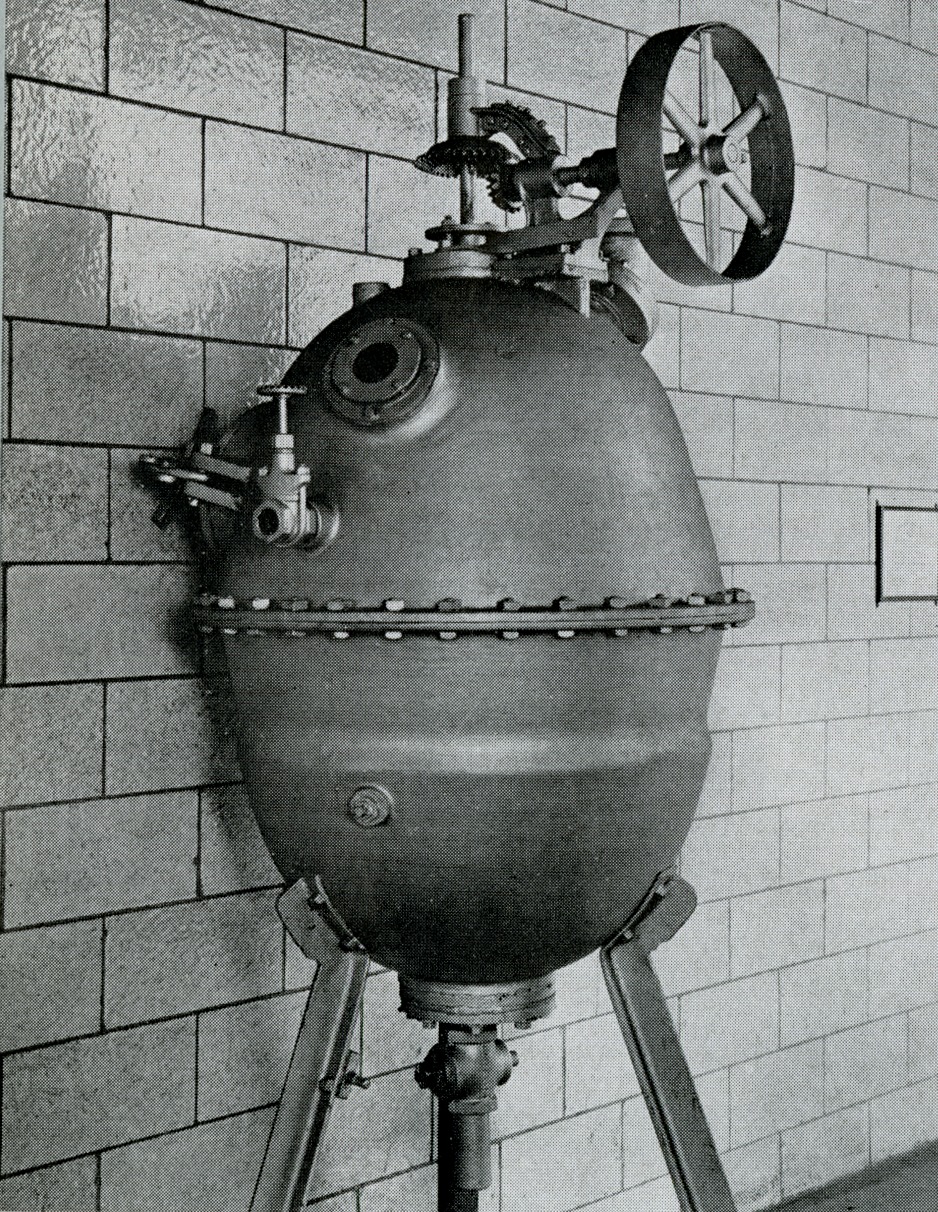
The beginnings of plastics in our world sound like the exploits of alchemists discovering new formulas in pursuit of superior substances. Early polymers were quite different from the plastics of today, and are coveted as collectibles by some. You can read about the history of plastics in the Sources at the end of the article. To keep it short, chemists strove to create new materials for various reasons, often economical. Many of the early plastics were supposed to substitute expensive and rare resources such as ivory. Some can be made at home using quite basic ingredients and equipment.
Then there are modern plastics we all know. They make up a huge amount of the world we live in. Stuff like PVC and HDPE need no introductions, and it can be guessed that Kevlar also rings a bell. These plastics require a complex understanding of chemistry. They also need access to rather advanced equipment and non-basic resources, and are made in large scale. Many are made of petroleum, another thing not commonly used in fantasy settings.
Fantasy plastics
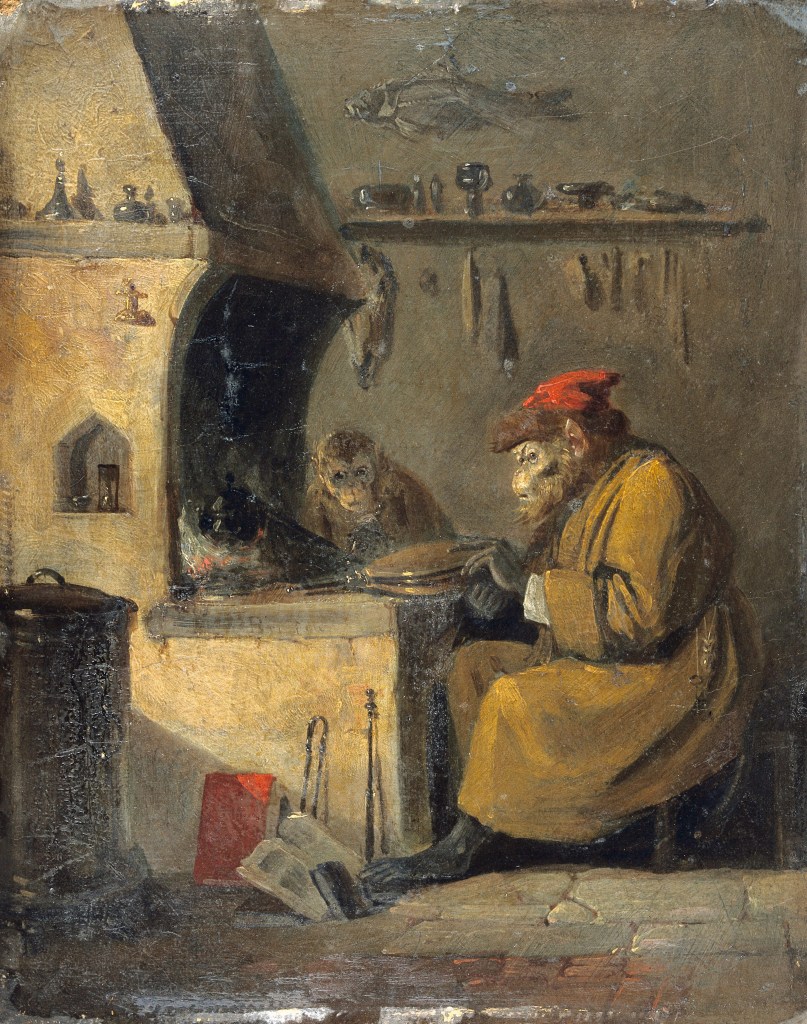
Oil by Edmund Bristow (1787–1876) via lookandlearn.com (CC BY 4.0)
Now let’s take a look at our fantasy settings. Why would you introduce plastics into a world where there are other interesting materials, often magical? Think about who’s going to be the creator of the newly introduced plastics. Yes, the alchemists! Some will be conservative and stick to a dozen essential creations that they spam all over. But I believe in most settings the alchemists constantly look for new ways to power, knowledge, and destruction. It’s a matter of time before they start stumbling on plastics. It’s also a matter of availability. Sure you can use mammoth ivory, but it would cost you an arm and a leg. Dairying cows are grazing under your window at this very moment, and for a few coppers you can get all the milk you need to make that new component out of casein plastic!
Now you might say that mammoth ivory has certain magical properties that make it not only more valuable but also desirable for certain applications. Why couldn’t your not-Galalith also have properties that would make it stand out in its own way? It could provide different magical advantages, or dampen negative effects. When made from a special milk, let’s say unicorn milk, unique properties could develop. Even with cow milk maybe the new material is the only one that is non-reactive in combination with another. Or perhaps plastics aren’t new but instead old, the remnants of an ancient civilization, and can be found as artifacts from a bygone era. Either these are usable as they are, or the plastics could be only collected and remade into new items. Roman glass was reused in Medieval period in this way, to the extent of scholars writing explicitly that you should dig in old Roman ruins for shards of quality glass to recycle!
Plastics in other settings
It’s not an easy task finding plastics being used in fantasy. Authors or game designers prefer more “fantasy” materials than something that surrounds us everywhere in real life. There are few exceptions I found and would like to introduce shortly.
Dungeons of Dredmor
The light-hearted 2011 rogue-like introduced plastics as “plastic ore” that can be melted into “plastic ingots”. Most of the craftable items like “pleather armor” or “plastic bolts”are near-useless . There are some high-level weapons though that are crafted using plastic ingots. This is something that can be pointed out as rather useful. Plastics in your scenario don’t have to be common or available. There can instead be specific conditions under which they become a valuable resource.
The Elder Scrolls
One of Morrowind’s most iconic materials is bonemold. It is a composite material made from bonemeal (ground bones) and resin. It is similar to real world bakelite, with bonemeal serving as the filling material, and the resin unsurprisingly as the resin. Both components are natural in origin, so easily explained in a fantasy setting. Being used mostly for making armour by the Dunmer armoursmiths, it has nevertheless other uses. In TES: Morrowind we see bonemold longbows, arrows, and crossbow bolts. Later games in the series offer only armour that can be crafted from bonemeal, leather and some iron.

The use of bonemold in The Elder Scrolls (Morrowind in particular) shows how you can get unique and interesting results if you don’t think only in terms of traditional fantasy options. Bonemold feels anything but immersion-breaking. It’s never called a plastic, and fits the strangeness of the Dunmer culture very well.
Conclusion
Only two examples of plastics in fantasy settings? Well, the reason for this article is the scarcity of plastics in fantasy. So yes, it’s quite hard to find some media where it’s been used. Outside of settings where plastics are by default common, naturally. The examples show two different approaches. One using outright “modern” plastics for comic relief (Dungeons of Dredmor), the other deals with “archaic” plastics in a less conspicuous way (The Elder Scrolls). Both have their pros and cons. It depends on the setting and tone of your game which is better suited. It’s quite possible to use both “modern” and “archaic” plastics in a single setting. Just avoid using real world names and descriptions such as PVC, or plastic.
What are your thoughts on plastics outside modern or sci-fi settings? Hate it or love it? Do you recall seeing any sort of plastic in a fantasy setting? In a video game, a novel, a movie? Please feel free to share your views and experiences in the comments section. As always, thanks for reading and sharing!
Sources
- https://web.archive.org/web/20130803122739/http://www.plasticsindustry.org/AboutPlastics/content.cfm?ItemNumber=670
- https://plastiquarian.com/?page_id=14221
- https://historicalretail.com/blog/is-it-bakelite
- https://acs.org/education/whatischemistry/landmarks/bakelite.html
- https://www.langantiques.com/university/galalith/
- https://www.fountainpen.it/Ebanite/en
- https://www.diepresse.com/3821346/vom-kunsthorn-aus-kaese-bis-zum-plastik-halbleiter
 Rashundai Games
