Estimated reading time: 13 minutes
It’s been over a week since the Season 4 finale of True Detective by HBO, and it’s been a thoroughly enjoyable ride this past few weeks. Maintaining the high quality writing and production values of the series, the last season takes us to the fictional Alaskan town of Ennis. This is where you might consider stopping reading if you haven’t seen the show, yet. I’m not going to go into any details of the plot, but some technical spoilers might appear. And further down there might be spoilers for other works, so walk softly.
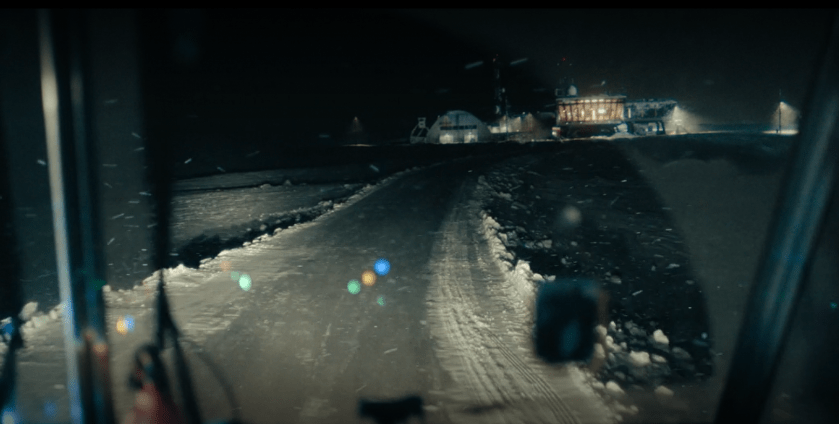
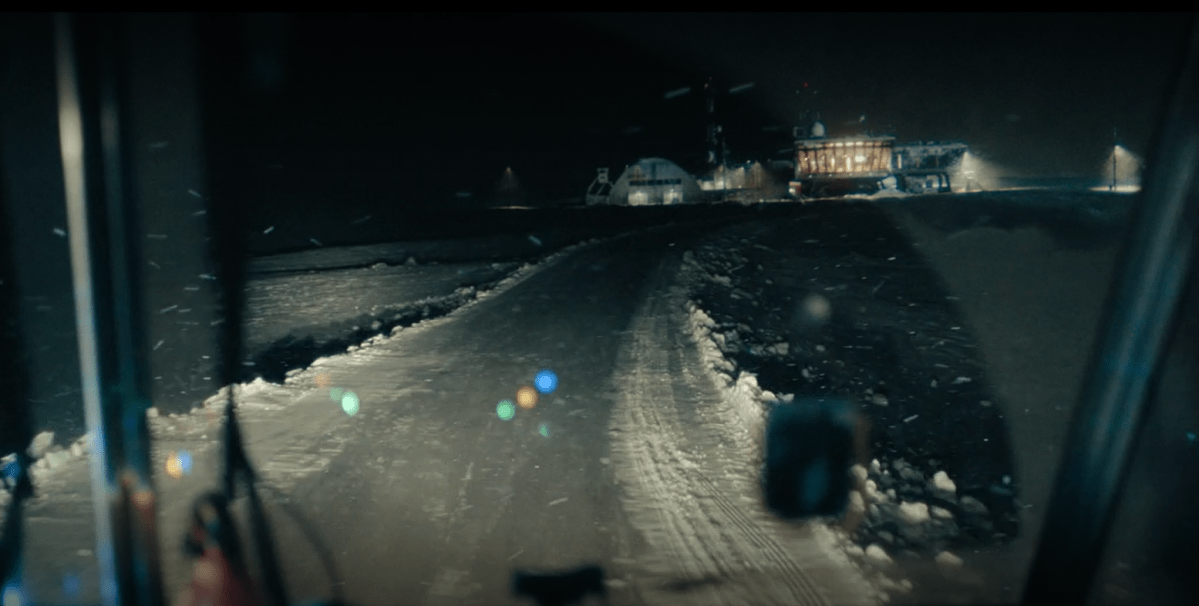
All rights reserved to HBO and/or other respective owners.
With the exception of Season 2 True Detective always contained elements of supernatural mystery. Season 4 ramps this up quite significantly and due it feels like a mystery/horror series rather than a crime series most of the time. The structure also seems very usable as an inspiration for a tabletop adventure. I can already see an outline with several dungeons and encounters.
Due to its setting there is a resemblance to other works, and I mean it in the most positive sense. The season fits into a category I call “Frozen Horror” and this article will cover that. I will share my thoughts about the characteristics, things that make it unique and that can be used in your game. Afterwards I will provide a short overview of some works that I consider Frozen Horror.
Frozen Horror themes
There are certain themes that are essential for the Frozen Horror feel and I will outline their potential for your games here.
Adverse weather
First of all it’s the adverse weather. We’re dealing with polar areas where outside temperatures fall deep below zero. While this is obviously not an insurmountable obstacle (even more so in a fantasy setting), it sets some rules and boundaries. To stay outside most of the time you need good winter clothes. What if you have no access to them for a reason? Or if they get torn to shreds by a monster attack? Many surfaces get slippery due to ice, and handling equipment without necessary precautions can also be tricky – swords can freeze in their scabbards for example, and some liquids can freeze in their containers.
Low visibility
Snow storms can be fatal even when properly clothed, and this can be used to control when and where can the party go, if you have need for such things. With snow storms there is also the danger of low visibility. All sorts of monsters can move at pike’s length unseen and unheard by the characters due to a raging snow storm. Distress signals, burning settlements, and magical effects can also be hidden by a storm.
Long periods of darkness
If your world is a planet with Earth-like properties or similar season arrangement there are regions where night lasts for weeks at specific times of the year. The resulting darkness of a polar night can be oppressive, depressing, and bring all sorts of trouble – light-sensitive monsters are free to roam, light-based magic might not work as well while dark arts might grow in potency, solar technology is effectively disabled. An interesting twist is the opposite state or polar day, but that has a whole different set of implications. Either way it sets a timeframe for the plot. Things might get better after the long night passes, or perhaps something has to be done before it passes, or even worse things will arrive.
Remoteness and isolation
Another heavily prominent feature of Frozen Horror is the remoteness and isolation experienced throughout the story. These works take place at the edges of settled regions, at remote outposts separated by barren wasteland, or during expeditions into unknown lands. Help and support is often unreachable due to distance, weather conditions, lack of suitable transportation, or a combination of all mentioned. This is even more effective if there’s a specific need that can only be fulfilled elsewhere – the cure for a condition, research capacities, “silver bullets” for a specific monster. As with darkness this might set a timeframe, though differently. A supply ship might arrive only in certain intervals, or mountain passes might be snowed in for a good part of the year.
Frozen secrets!
And last but not least, there’s no Frozen Horror like one with frozen secrets! Whether it is some kind of disease or monster trapped in the ice, or forgotten structures and technology, it’s a classic. The ice might be thawing naturally, or there might be deliberate attempts to release or discover whatever it is that is frozen. Of course not everything that’s frozen is a menace, sometimes it’s the exact opposite. There might be technology, knowledge, or some power that the party needs. But there might be other things frozen with the desired goal, not as much desired.
A good Frozen Horror doesn’t have to include all of these themes, but often it does. Some of them are specific for a certain environment, some can occur elsewhere. You can be very remote and isolated in a desert, and a desert storm will provide low visibility, but there will be no natural long-term darkness (assuming an Earth-like world) and certainly no frozen secrets.
Next there are some examples that I have tried to keep short and without spoilers. There are certainly other works that could be given the Frozen Horror label, and I will be glad to read about them in your comments.
- At the Mountains of Madness (1936)
- Who Goes There? (1938) and Frozen Hell (2019)
- The Thing (1982)
- The Thing (2002 game)
- 30 Days of Night (2007)
- The Thing (2011)
- Fortitude (2015-2018)
At the Mountains of Madness (1931)
The H.P. Lovecraft novella deserves to be mentioned first, as it’s the one that many others have taken inspiration from. It’s also one of the best works by HPL, and it should be on your reading list if you want to base your setting or adventure on Frozen Horror.
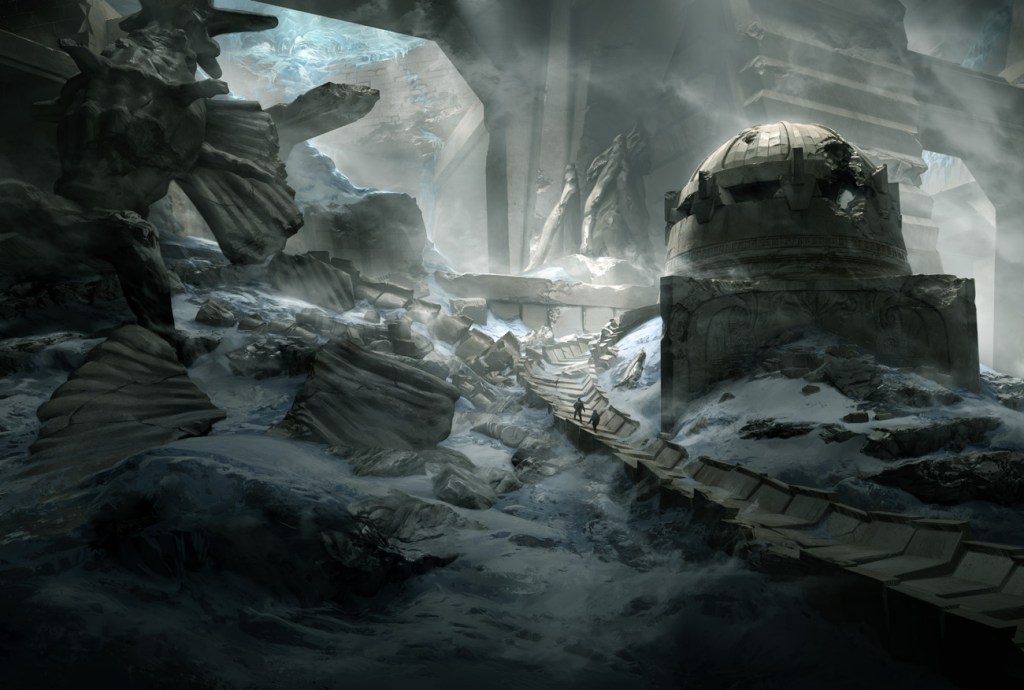
At the Mountains of Madness tells the story of an Antarctic expedition. An accidental discovery leads to mysterious disappearances and deaths, and ultimately the protagonists find themselves in a lost city. Eons forgotten, the city reveals unsettling secrets, some of which are still alive and dangerous. Narrowly escaping with their lives (but not sanity) the heroes witness things too terrible to describe.
I’m being vague on purpose, because I really wouldn’t want to spoil this to anyone. Go read the novella as soon as you can, it’s public domain already! Lovecraft wrote it later in his career, so he already had an established mythos to reference and draw upon.
One can find themes of isolation and remoteness, and secrets frozen in the ice in At the Mountains of Madness. Even if Lovecraft wasn’t their creator he used those themes expertly. And as I mentioned before, he influenced further works immensely.
Who Goes There? (1938) and Frozen Hell (2019)
Who Goes There? was written by John W. Campbell and published in 1938. In 2018 an original longer manuscript was found and released in 2019 as Frozen Hell. I haven’t read either, but the new release is on my list. Since I can’t offer my own views, I’ll keep it short and only remind that this is the work The Thing was based on. When I get my hands on a copy of Frozen Hell, I’ll either update this post or maybe write a new one. Leave a comment if you have read it!
The Thing (1982)
For me this is it, the perfect example of Frozen Horror, and a top notch horror movie overall. I have seen different opinions, stating that The Thing is overrated. What do those people expect from a great horror movie that they didn’t find in the Carpenter masterpiece is a mystery to me. But hey, I don’t like some generally-accepted masterpieces either, so I accept it with only a little grudge.

The 1982 adaptation of Who Goes There? by J.W. Campbell is set in Antarctic on a remote scientific base, where suddenly things go very wrong (these vague descriptions are a pain, but I wouldn’t like to spoil too much). There’s a lot of psychological horror, body horror made with perfect practical effects (certainly for the time), and an ambiguous ending. The setting ticks off all the hallmarks of a Frozen Horror, with remoteness and isolation, bad weather conditions, and frozen secrets being the most prominent.
It is perfectly adaptable to tabletop gaming, as many have done already. There is also a sequel video game and a prequel movie. If you liked The Thing, check them out as well, or at least read the following paragraphs.
There has also been an earlier adaptation of Campbell’s novella in 1951 under the title The Thing from Another World. I have not yet seen the movie and as with the book I don’t want to rant about it basing my knowledge on what I read on the internet. Therefore until I have the opportunity I will only mention it. As always comments if you’ve seen it are welcome!
The Thing (2002 game)
Intended as a direct sequel to the Carpenter movie, the game picks up right after the ending. It chooses one possible explanation for the ending as canon and elaborates from there.
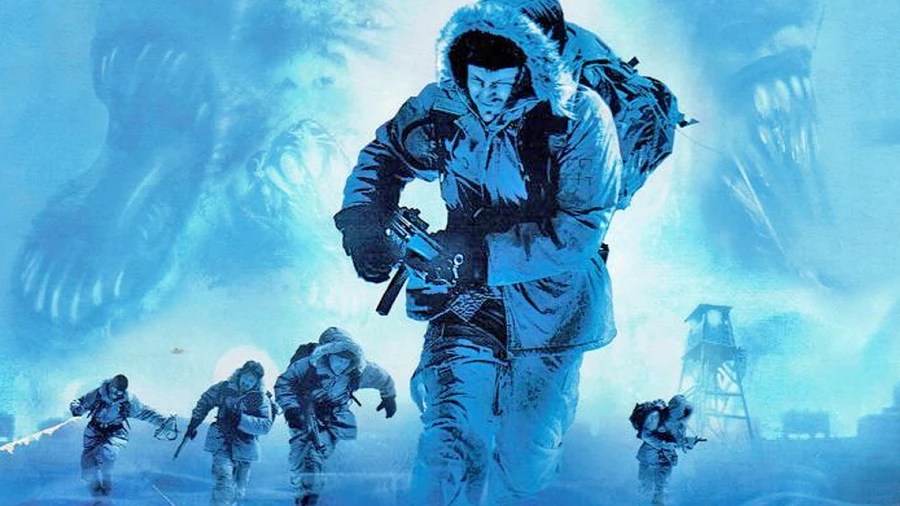
In this 3rd person team-based action game you are Captain Blake, an US Special Forces operative sent with his team to investigate. Being an action game it offers a lot of shooting and jump scares. I remember when it was new I couldn’t play it myself because of the tense atmosphere and scariness, and instead watched as my dad played the game.
Even though it lacks the slow burn psychological stuff of the movie, the game gets many things right in my opinion. The events of the game don’t collide with what the movie started, or at least as far as I remember. I’ll have to play it myself for a deeper analysis, so expect an article on the game itself in the future. Meanwhile you can check this post by Syfy for some background information and plot synopsis, if you like.
30 Days of Night (2007)
Let’s take a break from The Thing and the Antarctic for a while and visit Alaska again. Based on a comic book 30 Days of Night takes place in Barrow, Alaska (now Utqiaġvik) during the polar night. The local events take a wrong turn after the arrival of a sinister cargo on a ship. The long polar night is central to the plot and you can make a guess what thrives in the long dark.
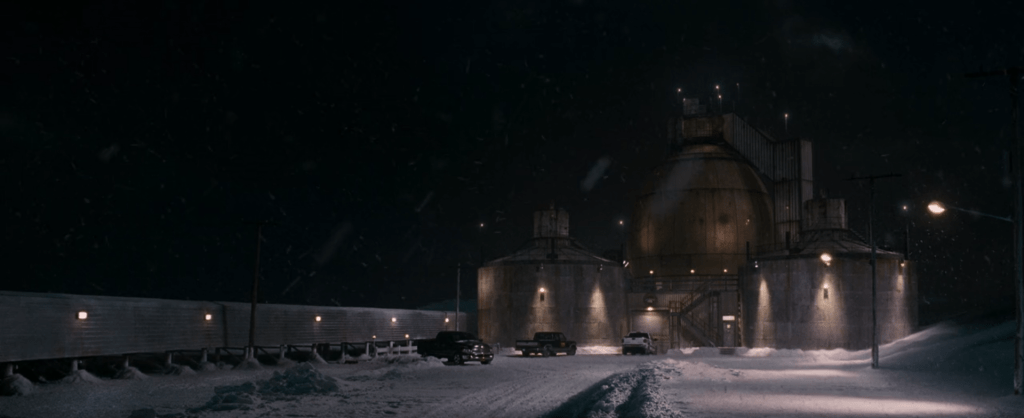
Once again the themes of remoteness, isolation, long period of darkness, and severe weather take the lead. After the movie a miniseries prequel (2007), sequel (2008), and also a direct-to-DVD movie sequel (2010) were made, but I haven’t seen those. The ratings make me a bit uneasy about spending my time on them, but do leave a comment if you have seen them!
The Thing (2011)
A prequel rather than remake to the 1982 Carpenter movie of the same name. I find it commendable that in an age of cheap remakes the creators instead elected to make a tie-in with the original movie. It is up to everyone’s judgement whether they succeeded.
The story is set right before the events of Carpenter’s Thing at another research station, this time Norwegian. You can watch the 1982 movie right after this one and the story will continue almost seamlessly.

In my opinion it is not bad. There’s not exactly the level of mystery and suspense as in the 1982 movie, and it’s more predictable as far as I remember. There are similar themes, similar progression, you are aware that this has to do with the other movie all the time. Don’t expect any great novelty or originality, but it does what it aims to and it really feels more like a loving homage than a cash-grab remake.
Fortitude (2015-2018)
I have saved this one for the last, because it is one of my favourite shows, and also one that the latest True Detective series reminds me the most. Fortitude is set in a fictional town of the same name in Svalbard. The inhabitants are employed mostly as scientists, miners, or fishermen, plus the necessary services.
The first season is mostly a crime investigation show with little hints of mystery. With the second season Fortitude goes full mystery/horror with supernatural elements, and this is the season I find both most fun to watch and most usable TTRPG-wise. The latest True Detective series reminds me of this second season in a good sense, as I mentioned before. There is also a third season, but it’s inferior to the first two. It feels like an attempt to tie things up after being scrapped by the producers. What I find the worst about it is what happens to the characters. Formerly complex characters are flat in the last series and behave stupidly. And also it seems the creators tried to make everyone look bad. I’d say you can safely leave the third season out.
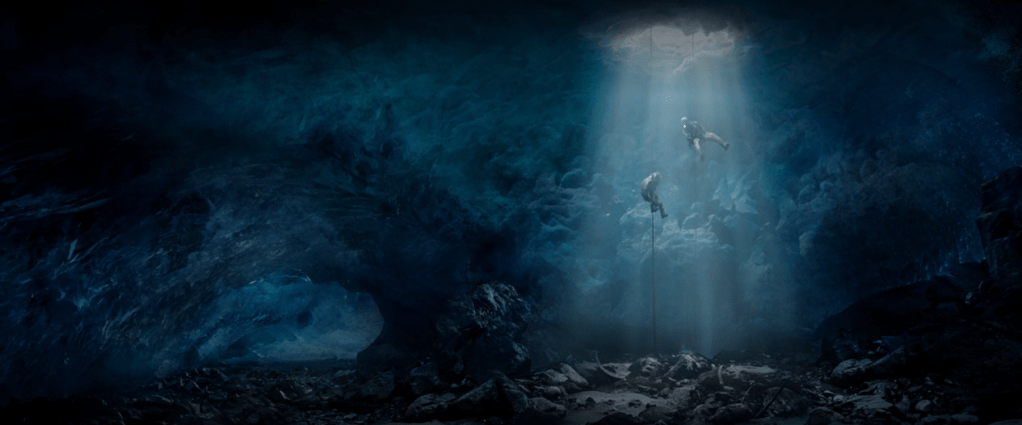
Fortitude has a great atmosphere overall and uses the themes I wanted to talk about really well. There is severe weather, darkness, isolation, various political and social tensions as well, and of course frozen secrets. The supernatural is well interwoven into the “normal” problems of an arctic settlement. The cast is very good and the characters and their motivations are well-written (until Season 3). As with True Detective: Night Country, there is a lot of potential for someone who would like to turn it into a tabletop adventure (or campaign).
Final remarks
What I call Frozen Horror (and you might call it differently) offers a unique experience, lately revived by the fourth season of True Detective. I have put some of my thoughts on the topic into this article, as well as some examples I would recommend. Of course there is more to each of them than the things I described – The Thing is a different story than 30 Days of Night. In this article I tried to point out some of the similarities that lie mainly in the environment and setting. I am eager to read your thoughts on this matter and perhaps your suggestions for other movies, TV shows, video games, etc. The more inspiration, the better.
I will also prepare separate articles about some of the media mentioned here. Requests and suggestions will be happily considered. If you found this post interesting, it would be great if you could share it with your friends. Comments are welcome, and don’t forget to follow the blog or our social media accounts for more content!
 Rashundai Games