2024 in Review: Our Journey at Rashundai Games

Estimated reading time: 8 minutes

It’s already been two weeks since the world leveled up from 2024 to 2025. In another two weeks it will be a year since this blog has gone public with the first post. This will be a brief review of what this site achieved, what it didn’t, and what I hope it will achieve this year.

tl;dr

  • More frequent posting of shorter articles in 2025
  • Dungeon 24 continues on irregular schedule
  • At least 3 new Dungeon series articles planned
  • Whole new exciting series coming soon
  • Finally some game analyses!

Goals set and met

My goal when I started with this blog was at least one post per week. That changed to two per week with the addition of Dungeon 24. Which should get us at 104 posts total. And that’s not counting various random acts of writing I thought I would be committing.

There are 13 published posts on the site in 2024, far less than I expected. I’ve been quite optimistic, as I thought to have enough topics to cover, which was and still is true. What I didn’t have was the time to write all the longforms I envisioned. I am used to working with sources, citing (or at least checking) everything, polishing the language and revising if needed. When I publish something I want to be able to stand up for my work. The schedule I set for myself was rather unrealistic, as I’ve learned.

Dungeon 24

My apparent nemesis, the Dungeon 24 challenge. I stated in the beginning that this type of challenges isn’t really for me, and I was right. I managed for a few weeks but after that I started getting more and more behind the schedule. The last update was in September and it should cover the first half of March. I have more in my notebook, but couldn’t get to processing it for the blog.
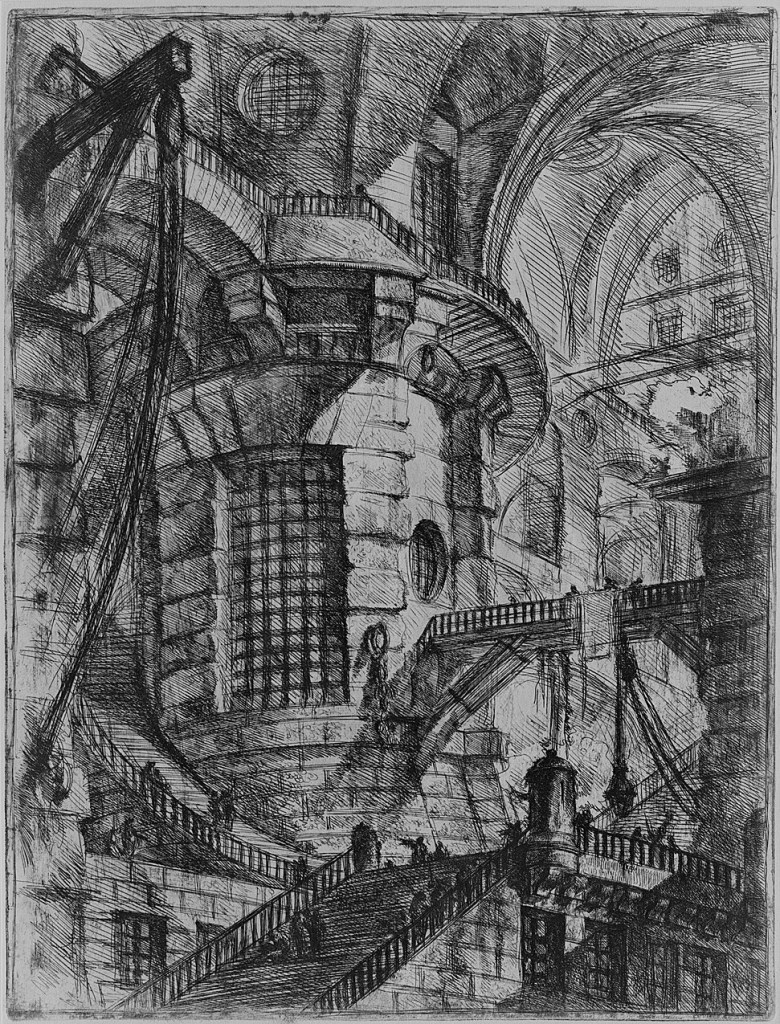
The Round Tower by Giovanni Battista Piranesi, 1761. An imaginary dungeon sketch.

Nevertheless I will continue with the dungeon this year until there are at least 365 rooms. There are still ideas I want to put in there, and I don’t want to leave it unfinished. It also serves as a laboratory and test tube for the Dungeon series of articles on this blog. The frequency of the updates will be irregular, same as with the other article types.

There’s one other thing worth mentioning. The article with the most views in year 2024 was the introductory post to Dungeon 24. Somehow my site is the number 3 result on Google, which is nice, I guess. I would rather have traffic for my other work, but if it helps people get to the site, it’s fine.

Dungeon series

I consider the Dungeon series the current flagship of the blog. The articles published so far offer my views on different aspects of dungeon design and functioning. In the three published articles I have discussed dungeon size and megadungeons, the way dungeons should and could be explored, and the Palimpsest dungeon concept. Dungeons, in their many forms, are an integral part of TTRPG experience for many, regardless of the system or setting. So far I’ve concentrated on fantasy settings, but many of the ideas presented in the articles should be useful for other types of settings as well. Anything can benefit from solid internal logic instead of theme parks composed of unrelated challenge sequences.

I have two more articles in various states of completion, that should be ready this year. In one I will elaborate on the Palimpsest dungeon concept. The other will deal with bringing life to the dungeon. At least three more exist as outlines on my to do list. These will deal with stuff like level interconnectedness and verticality, if that’s a real word. More topics will surely progressively arise from other activities, including the ill-fated Dungeon 24.

Different topics

Apart from the Dungeon series I managed to write three articles providing summaries of a certain topic. Each deals with a different area – settings, items, and general theory.

In Frozen Horrors I described a setting type notable for combining harsh environmental conditions and isolation with horror themes. I actually wanted to make several updates with more works, but didn’t find the time to do the necessary research. There are still movies, books, and video games that could fall into this sub-genre. Not all are suitable to take inspiration from, but that’s up to the readers of course.

Slingshots part I was a summary of this toy/weapon in various media. I’ve been particularly focused on how slingshots are explained and presented – viable weapon or novelty? Again there are other media that could have made the list, and I’m slowly working on an update. There will also be a Part II sometime this year, although it’s not a priority. It will deal more directly with the application of slingshots in your games and settings. I think an article on slings is in order as well, as a comparison between a real weapon that killed people on the battlefields versus what is a modern improvised weapon at best.

The article on using video games as a resource is a sort of necessary introduction to a type of article I plan on adding to the repertoire. As mentioned in the post itself, these won’t be game reviews as known from gaming blogs and magazines. Things like hardware requirements, controls, or replayability won’t matter as much as storytelling, ideas, and inspiration potential for your tabletop games.

What to expect in 2025

This year there are going to be some changes. There is a lot I still have to learn and fine-tune. So far I focused on longforms that required some research and thought on top of the idea and writing. This led to very sporadic updates. My goal is to be more active, so in addition to these longforms I will be posting shorter posts. Likely true blog posts with various thoughts and ideas that I might elaborate upon in the future.

I haven’t published any playable material, yet. There are several class options for D&D on my table I’d like to see finished, so these will have priority. Some need only cosmetic changes so they come in a nice package. Though it’s the contents, not the form, that matters, I wouldn’t want to publish it as bland text files. Other systems like 2nd edition Pathfinder and Mörk Börg will also receive some attention when possible. Unlike theory, which I believe to be mostly universal, different systems allow different supplements.

The main focus of the blog will remain on theory, as I intended from the beginning. For the longforms the Dungeon series will remain the main theme, so expect more in that vein. I have a few other avenues that I would pursue. Some I have outlined above, such as a follow-up to the article on slingshots. I also want to start another series of articles focused on different materials. Some that are readily available in most settings, some that are rare. I have some possibly controversial takes that might not suit everyone, but I very much look forward to exploring these ideas.

I will try to publish a few of the video game analyses I advertised. So far I haven’t finished any of those, even though I have a few in process. This year I plan on finishing at least some game articles. One hot candidate would be Arco, a fine RPG with a captivating Mesoamerican setting. Do check it out!
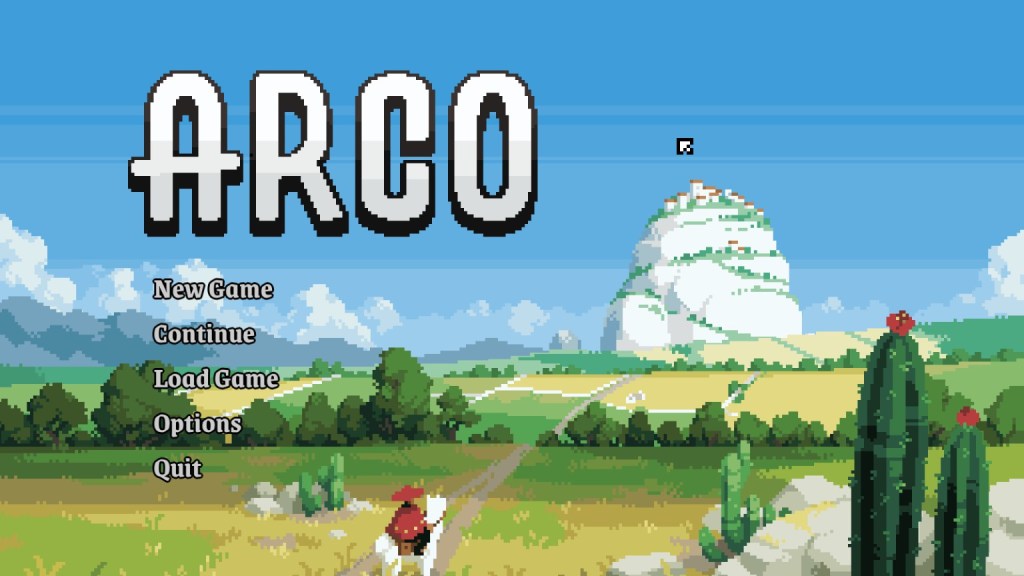
One of the menu screens. All rights reserved to Franek, Max Cahill, Bibiki, Fáyer, and their publisher Panic.

Final remarks

It would probably be a good thing to set concrete measurable goals for this year, though I am reluctant to commit to precise numbers. I think that with less focus on longforms and more shorter posts I could get at 30 articles this year. There will be the Dungeon series articles, and a new series that I’m keeping as a surprise until the first article is ready.

I also want to put more effort into promoting the site, so that it gets a little more life. For example the Frozen Horrors article had 3 likes out of only 4 views. This tells me that people find the stuff I write interesting if they find out about it.

With this in mind I would like to ask again to share the articles you like. We all have our networks and your sharing is the best way for the blog to spread. This is the kind of feedback I need to improve the site. That and the comments. Please take a moment to write down one or two sentences about what you liked, or even where you disagree. Having constructive discussions under the posts would be wonderful.

I would like to wish you all a fruitful and satisfying year 2025. May you achieve your goals and have lots of fun with TTRPGs or any other hobbies you have. Also take care of yourselves and your close ones, stay safe through the year!
Resource: Video Games

An introduction to video game analyses that will be appearing on the blog. More coming soon!

Estimated reading time: 9 minutes

Video games and TTRPGs have a long history that needs no introductions. Many great computer role-playing games (cRPGs) are based on TTRPG systems or at least their settings, as you probably know well enough. Like other media, video games can be a great resource for your game, and sometimes the less obvious choices can be more interesting. Everyone got some inspiration from some cRPG they played, but great gems to add to your game can be found in any video game genre, and even in those that are not really good as video games.

The other strong point I’d like to make is that video games are very accessible and in my opinion can make TTRPGs more accessible as well. Not everyone starts with ASCII Dwarf Fortress or Space Station 13, but there are tons of games even casual gamers or non-gamers recognize. You are probably thinking about some examples right now. On the other hand not everyone who wants to play TTRPGs is a devoted tabletop gamer, well-versed in all the editions and different systems. Many times your friends are not even avid readers, having read perhaps Lord of the Rings or Harry Potter because everyone read it at the time. They might play video games though, and through them you can explain TTRPGs, whether it’s the mechanics or general principles. I know I have had players whose only connection to TTRPGs was through video games, and the experience helped them get into tabletop gaming.

In this series of articles you will find not exactly reviews, but rather analyses of different video games. Sometimes they will be in-depth, sometimes I will only cover a select mechanic, piece of lore or storytelling, or just make stat blocks for a few interesting monsters. The selection of covered games is not really governed by any principle other than what I find interesting to write about, but if there is a game you would like me to have a look at, please leave a comment and we’ll see about it!

Genres

As I stated above, the obvious genre choice is cRPG. Some amazing titles fall into this category and surely some of them will appear on this blog. There is, however, more to video games than role-playing games, that can be used in your tabletop games. The closest to cRPGs in terms of TTRPG relevance is the triad of adventure, action, and strategy games.

Adventure

Adventure games usually share much with cRPGs in terms of rich story and worldbuilding. What’s usually missing is the progression of the main character(s), but even this is not always true. Adventure games also often rely on puzzles and item combination rather than combat or other contests. Exceptions exist, but generally the are not that common. There are action adventures where there’s combat and platforming interwoven into the adventuring part, like the Legend of Zelda games. There are RPG-adventure hybrids that are not exactly RPGs, but contain many RPG elements, such as character selection, levelling, and combat, with the Quest for Glory series being a wonderful example.

The very beginning of the VGA Quest for Glory I. All rights reserved to Sierra Entertainment and/or other respective owners.

Obviously you can take inspiration from the story, puzzles, or characters in an adventure game. You can also focus on the visual side of these games. Unique environments, fantastic creatures, or spectacular spell effects all find their place in adventure games. Especially in later 90’s and early 00’s with studios such as Cryo there has been a trend of beautiful graphics and wondrous locations that can give you a creative boost.

Action

Action games come in many flavours, from simple shoot-’em-ups or fighting games through platformers and shooters, metroidvanias and souls-likes, to action RPGs. They even differ inside their category, mainly when it comes to depth of the story and worldbuilding. Story is not top priority in these games, but there are exceptional titles with top-notch storytelling – pick any title from Supergiant Games for an example.

Even if an action game isn’t an “action RPG”, RPG elements are often present. Most of the time it’s some form of character progression or selection, and equipment management. Having multiple choices isn’t that common, though again, not unheard of.

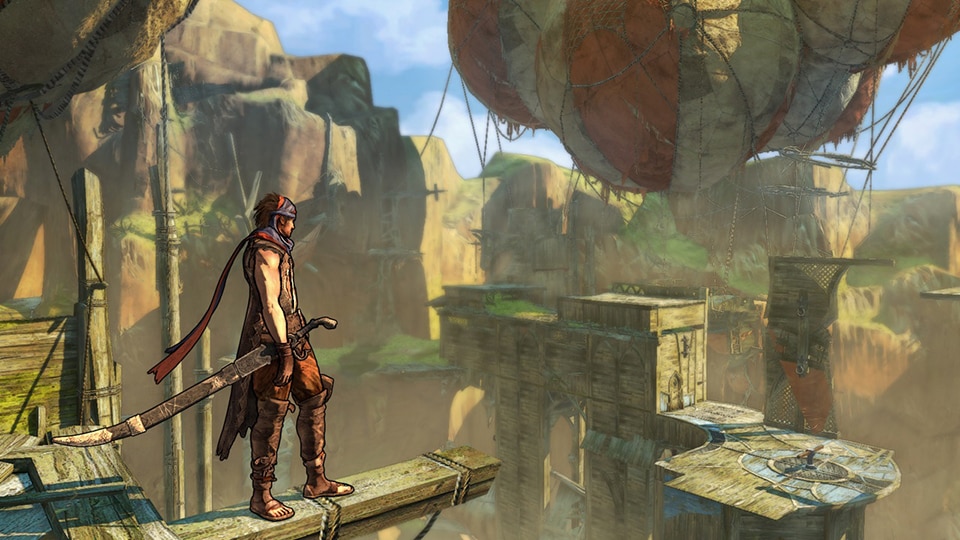
The Prince enjoying a beautiful view in Prince of Persia (2008). All rights reserved to Ubisoft and/or other respective owners.

The various subgenres offer different experiences, but concerning what they can offer your tabletop gaming needs, they are quite similar. Environment and level design, puzzles, enemies, weapons and spells, or character options are some of the features that can be found in most action games. Of course the weapons will be different in a shoot-’em-up like Tyrian from those in Doom or Prince of Persia. The environments will also be of a quite different scale. Can you use them all for inspiration? That’s up to you!

Strategy

As with action games, there is a large spectrum of strategy games at your disposal. The basic distinction is whether they are real-time or turn-based, and this often dictates other parameters of the game. They can be peaceful with little to no fighting involved, or full-scale wargames. The emphasis can be on tactical decisions or large-scale strategy, micro- or macromanagement. Whatever the case, usually there is enough inspiration to be found for your tabletop game in any strategy.

Tactical strategies are often closest to TTRPGs, and the inspiration probably works both ways. As with action games, you can pick enemies, weapons, spells, and all sorts of other options from tactical strategy games. Whether real-time (Commandos, Desperados) or turn-based (UFO, Jagged Alliance, The Banner Saga), they offer plenty of options that can inspire you. RPG elements are often present in the turn-based camp, not so much in real-time games.

Builders such as The Settlers, Cultures, or Anno series offer different scale and experience. While combat is commonly present, it’s usually much simpler than in tactical strategies, and only supplements the main focus of these games – building settlements, bases, kingdoms. Exceptions exist, with Stronghold being a good example of a builder with heavy emphasis on combat of the siege variety. Usually mid-scale economics play a large part in this type of games. They can be used as an exercise in settlement design, and for learning how to think in a slightly larger scale than party-level in your worldbuilding.

Just another day in Crusader Kings 2. Also a good plot hook for your next adventure. All rights reserved to Paradox Interactive and/or other respective owners.

The 4X or grand strategy games are the next step in scaling upwards. Often the focus of these strategies are whole nations, worlds, or planets. The Civilisation series and games by Paradox Interactive are good examples of this subgenre. Again you can get inspired concerning the large-scale matters of your TTRPG. The way kingdoms and empires interact, the issues that need solving both inside and across borders – all of this you can try out in this kind of strategy games before using at your table. Just start a game of Crusader Kings, let the time flow, and you’ll have tons of ideas for your setting in the first ten minutes.

Other genres

What other video game genres you can get inspiration from? Well, the obvious answer is “anything you feel inspired by”! Like racing games with car tuning and championships? Maybe you can use similar ideas but in your game it’s chariots instead of racecars. What about other simulators, such as train simulators or fishing simulators? I bet you can see where this is going. You can also cater to your players’ preferences if you know what genre they like and add just a few noticeable traits from there.

What to use?

You can choose between two approaches. You can lift an element as it is in the source game, i.e. a monster, and use it at your table. Give it stats, maybe figure out its place in your world. Your players will recognize it and either scold you for laziness or praise you for using something they liked elsewhere. Best make sure the second option is more probable before you do this. If you know your players you might have an estimate, but you probably don’t want to do this for your first session with a new group. Either way you should be careful with this approach, as after the twentieth monster and fifteenth item from the games your players love, it might get quite annoying.

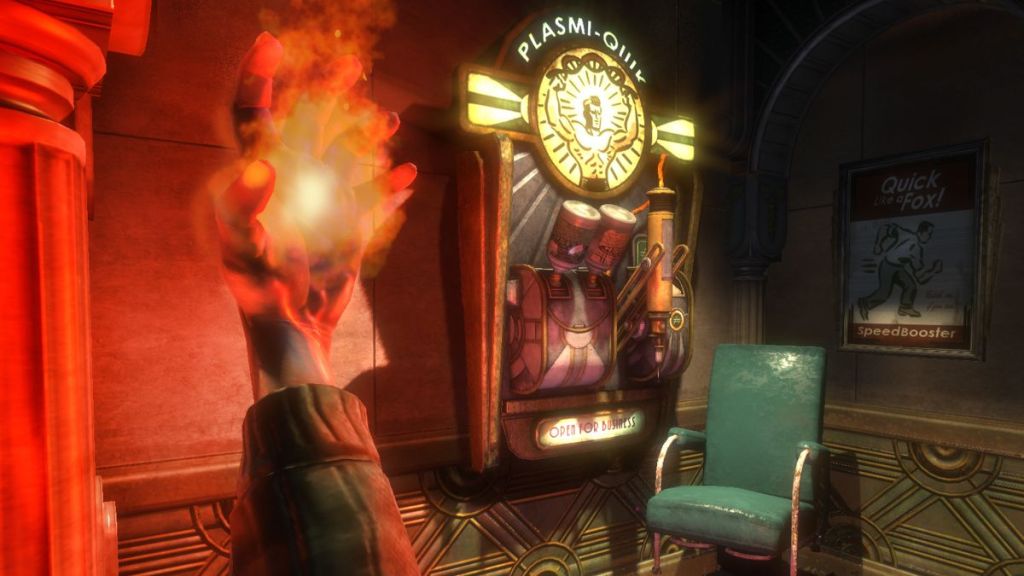
A plasmid vending machine in Bioshock (2007). All rights reserved to 2K Games and/or other respective owners.

The other approach is to analyze what makes the element you like work, and then build upon that. Let’s say you like plasmids and tonics from the Bioshock series. They are essentially consumables that grant spells or spell-like abilities, and are commonly available from vendors. Don’t use the terms “plasmid” or “tonic”, invent a different set of effects, maybe a different delivery method. Someone might still see the inspiration, and you make no claims otherwise, but it should fit better in your setting, and not come off as a rip-off. This is of course applicable to any source of inspiration, not just video games.

I have to say one of the best campaigns I experienced as a player was heavily based on Icewind Dale, where the DM essentially copied most of the plot and added his own elements (a lot, to be fair). But what you get with this approach is often a clash between your players’ expectations and your adaptation. If you’re lucky, you will only be reminded of this a few times each session.

Final remarks

It is quite possible that there’s nothing new for you in this article. You are probably familiar with video games and have used them as inspiration at least sporadically in the past. In that case you may consider this article an obligatory introduction, in which I state my goals and methods. If, on the other hand, you are not at home with video games, you might want to check some out as there are many original ideas scattered around.

As mentioned in the beginning, there will be analyses of video games in the future. Some of the games mentioned in this post will surely have their own articles, and there are many more I would like to write about. I hope you will find the articles interesting and inspiring. First of these will be posted soon, so you might want to follow the blog so you don’t miss anything!